Luhmann and the Analysis of Form

Posted by dasfseegdse Kamis, 17 Februari 2011 0 komentar
I've just completed two papers which make use of Luhmann's theory of communication, and as often is the case, I learn new things as I look deeper into Luhmann's work. What's really hit me is the extent to which Luhmann thought about social form and how he made distinctions about it. For whilst his theory is really a theory about communication, he sees social forms as particular  bounded communication systems. What holds each system together is what he calls a 'contingency formula': a central paradox which acts as a sort of 'strange attractor' (I think) around which the communications of a system revolve.

His analysis of social form therefore involves identifying the various contingency formulae of different social systems: he does this for law, art, love and intimacy, education, religion, economics, science.. all with the intent on pursuing his main goal which is to understand the constraints of modernity. The method is quite simple:
1. look at a network of communication - sometimes Luhmann focusses on what might be considered a 'community of practice' (Law, for example)
2. ask yourself "what is the paradox here?" - identify the contingency formula
3. analyse how the communications are reproduced against the background of that contingency formula: what Luhmann would call the 'code' of communication. (at least, this is my understanding...)

So, for example, the contingency formula of education is "cultivation". Luhmann explains his thinking around education as:

“Speaking about education (upbringing/education, LQ), one primarily thinks about intentional activities that try to develop a person’s abilities and foster his/her ability for social communion”


Qvortrup has commented that "[Cultivation] is a concept for something that cannot be generally defined, but for which a word is needed that signals a mutual understanding and agreement." (see http://seminar.net/files/LarsQvortrup-SocietysEdSystem.pdf)

The "word that cannot be generally defined, but for which a word is needed that signals a mutual understanding and agreement" is the essence of a contingency formula. For Law, it is "Justice". For religion, it is "God", for science, it is "limitationality" - i.e. the idea that our knowledge always requires further research.

I like this method, and it is similar to my thinking around the difficulties that  learners have with things like computer programming. Obviously, their attempt to program computers isn't a 'social' system at all, but nevertheless, there's some pattern of communication there centring around a contradiction. Similarly, I'm currently working with diabetic teenagers who are struggling to control their blood glucose: again, there are communication patterns centring around a contradiction. With the computer students, I set about trying to identify the contradiction. Learning for those students was a process of becoming aware of the contradiction and how the code of their communicative actions (practices, ways of thinking) was leading to these contradictions. This led to a redefinition of the 'code of communication' that surrounded the contingency formula: new practices, new ways of thinking. It may be that the contingency formula in these examples is still "cultivation", but there's certainly something to be gained from looking at small-scale patterns of communication which are contradictory.

Luhmann's analysis of the development of love and intimacy (which is one of his best books) over the last 500 years charts a similar development of the 'code' of love. His work on art is similar.

A lot of people find Luhmann very dense and difficult. Although he is difficult, I think he's also the most scholarly of all cybernetic writers: his reading and erudition are as fine as many literary and art historians and this coupled with his combination of very tight definitions and high sensitivity to the human condition have made him a figure of great interest to me.


Baca Selengkapnya ....

The caress of learning

Posted by dasfseegdse Selasa, 15 Februari 2011 0 komentar
In a discussion on Friday, the topic of great teaching being like a caress came up again. I want to elaborate on this because the theme of caressing brings together a lot of what I've been thinking recently.

Thinking about a caress - being caressed, or caressing - is very similar to thinking about grace: the gracefulness of motion, touch, elegance and poise. To me, all of these things are fundamentally musical. Indeed, my conversation on Friday suggested that they are fundamentally artistic. The arts - done well - teach grace. This is invaluable knowledge. The sciences are less immediately concerned with grace, although the finest exponents of the sciences know about grace. Much engineering and science tends to be taught in a rather graceless way. Often, our institutions suffer a lack of grace in their management as a consequence of graceless education: they can appear rigid, awkward, inflexible.

The form of a caress is I think tri-partite: it begins, usually softly, it climaxes, and it decays. Possibly this might be expressible as a pattern of 'degrees of variety': for example, something starts with low variety - a simple gesture. By amplifying the gesture and bringing in more gestures, a mini 'climax' might be reached with high variety (a high number of things that are going on, a high number of possible states something can exist in). Then control is regained, and variety is brought back under control - back to low variety.

If I stroke the index finger of my right hand on the back of my left hand, I feel initially a simple sensation. As I move it, I apply more pressure. I feel more signals of increasing intensity. Then I let the pressure go, but continue the motion of the finger, gradually taking it away. This envelope seems to be configurable in many ways - I might have a short attack and a longer decay, but basically its the same process. Sexual touching is I think much of this sort. Indeed, it is interesting to consider what happens at the moment of sexual climax when levels of excitement, breathing, pressure of skin, muscular spasm and mental fantasy all send multiple signals at the same time (obviously it doesn't make me popular to analyse this in situ!!).

In music, I've been wondering about the way this envelope manifests itself. The Forlane in Ravel's Tombeau de Couperin has been fascinating me. It's so sensual - both in its harmony, texture and rhythm. Looking at the extract here:


...makes me think that the first two bars build up tension by gradually introducing new chromatic harmony notes. This is released slightly in the second two bars. I think the climax is the first beat of the third bar. But there's something else going because there are 'mini' caresses happening in the dotted rhythm of the melody.
In the Bach excerpt above, the contrapuntal lines, in their overlapping contribute to a ebb and flow of complexity: caresses are piled on caresses.

These things are revealed in performance. And it is performance which I am particularly interested in with teaching. We perform our knowledge with our bodies, artefacts, our institutional context and tools. I might start talking, but then reach for a resource to amplify what I am saying; or use the resource in conjunction with a tool, or turn the class situation around and get learners to do the talking. The ebb and flow of all this seem to have a family resemblance to musical and sexual examples.

But the most interesting thing about caresses is that this is what is best to do with students who are struggling. The gently teasing-out of where the problems lie is a fundamental skill of great teachers. I think to understand how it is done, we have to understand something about what the teacher gleans from the communications given back by the learner. I think there's some sort of  model-building going on. The teacher works out where the contradictions in the learner are, for that is likely to be the root of the problem: those are points on a map and from there they can work out how to work with the student: metaphorically speaking, it is how they know where they place their hands.


Baca Selengkapnya ....

Educational Aesthetics and 'Huggy' subjects

Posted by dasfseegdse Kamis, 10 Februari 2011 0 komentar
The softest aspects of education are hardest to understand, whilst also being the most important. In so many educational situations - particularly those dealing with 'widening participation' students who have had a rough time both in school, and often in home, the natural instinct of compassionate teachers is to give them a hug, if not literally (which perhaps we ought to do more of!), then metaphorically. The experience can be transformative - a 'back to basics' moment which puts everything into perspective.

Unfortunately, our instinct is not to trust our instincts. Often with good reason - physical contact between teachers and learners is like walking a tightrope: clearly dangerous but potentially remarkable. It's easy to break the trust that is necessary (and it only takes one individual to do it), and so it is easier not to trust. But this is a tragedy for education.

Some subjects 'hug' people more than others. I studied music. That hugged and caressed in wonderful ways (and still does). Art, literature, drama, dance all do the same. Engineering doesn't hug so much. But we don't trust the hugging, so we withdraw the funding from those subjects that hug and put it into those that don't. Why? Because we are told those subjects which are 'hard' are useful; huggy ones aren't. But what we mean is that we can rationally justify the 'hard' ones because they are based on reason, and we don't understand hugging.

I think a way of dealing with this is to work towards a deeper rational understanding of huggy subjects, and the efficacy of hugging in general. For most artists, reaching a rational understanding of their art is something they wrestle with as they create. There are good rational places to start. Somehow we have to sort out the relationship between the inner-world of experience and its relationship to the outer world of material and social life. This feels like a 'game'... both Kant and Gadamer thought so... but what's the game? what are the rules? what does the board look like? Harre's Positioning Theory helps me here, as does work on Distributed Cognition.

Maybe with some better models that try to explore the 'game' might we begin to understand what the hugging is all about. Maybe one day we will realise what a terrible mistake we are making in not trusting our instincts!


Baca Selengkapnya ....

Should the UK sell its forests?

Posted by dasfseegdse Selasa, 08 Februari 2011 0 komentar
The UK government is planning to sell off UK forests. It is interesting to see this move as part of a broader trend in servitisation of the economy, for it has resonances with the way we think about education. Basically, the deal is to sell the land to private companies on condition that those companies maintain rights of access, ecology, and leisure facilities. In effect, it will turn those private companies into 'service organisations' who will provide access and ecological services for the benefit of the public. For now, there is no suggestion that those services will not be provided for free. The move has been prompted by criticism of the Forestry commission, which both regulates the care of forests and guards accessibility and sells the wood they contain.

Under the deal, private companies can expect to profit from the sale of wood, whilst potentially exploring ways of profiting from other diversified opportunities which might arise from owning the forest. But what's wrong with this?

I think this is a clear case of where the intrinsic value in a commodity passes to the few. The forestry commission may not terribly effective in managing forests, but it matters that our government owns it. It is an asset whose value lies in what it is, a value which can be passed from one generation to another, which can be maintained and kept by one generation for another. Collective ownership guards against commercial exploitation and slavery in the interests of a few. For it is the principle of good government that "government prevents injustice, other than that which it creates itself." If a government is unjust - or a government agency like the Forestry commission, the people can take it to task in a democracy.

If a company is unjust, it is more difficult for the people - consumers of services - to take it to task. Indeed, it can sometimes appear that the people can only take a service company to task by consuming more services (legal services, for example) which serve to amplify individual complaints to give them greater effect. (to what extent are all legal services 'complaint amplification services'?) Collective ownership on the other hand, means that collective political action (the realisation of the power of organised labour) can effect change without recourse to legal amplification services.

It may be that this is how things have to be. I think however, it is better to know this is how things are becuase only by understanding how things are might an effective way of dealing with the world in this new form be found.


Baca Selengkapnya ....

Libraries as 'home'

Posted by dasfseegdse Sabtu, 05 Februari 2011 0 komentar
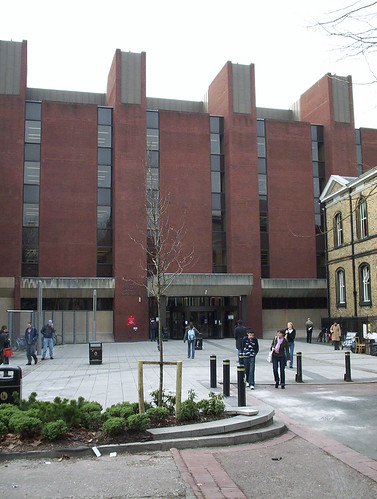
My eye was caught by an article on the BBC about libraries vs. the internet (http://www.bbc.co.uk/news/magazine-12340505). If I imagine the places I would go to feel 'at home', the library would be top of the list. From Luton public library, where as a teenager I worked my way through the record and sheet music section (before Spotify!) to Manchester's Henry Watson Music library - which is famously significant for so many musicians, to Manchester University's John Rylands library (where I spend much of my time now), all of the attributes of home and 'dwelling' are found in libraries. There is a degree of privacy and intimacy in a library which is curiously absent when I am browsing the web. But how can that be? Does that mean there is something about the phenomenon of privacy and intimacy which is distinct from being 'personal' or 'alone'?

This may be the case. Maybe it depends on what we think thinking is, and what we think the difference between 'intimate' thinking and being and 'public' thinking. (this is very reminiscent of the blog posts I made a couple of years ago about the difference between public and private: see http://dailyimprovisation.blogspot.com/2008/04/public-space-1.html). I've been thinking a lot about Edwin Hutchin's work on cognition. I've been making an argument based on Hutchins that "thinking isn't in the head": the brain regulates a continuous process of interaction with a material and social environment, with the viable operation of individual biology. Under these circumstances, the material environment is causal in this regulatory process. Thought and the environment within which thought occurs are not separable. This has implications for our thinking about 'home'. Whether homeliness and intimacy and privacy are 'in' the material environment of libraries or drawing rooms or bedrooms (which is clearly problematic), what happens in the inter-relationships between individuals in a society (which creates and maintains the environment) and particular material forms (like libraries) is a common and real experience. Destroy the libraries and you destroy part of the thinking of those individuals. You may destroy something of the thinking for generations to come (but this is more complex, for we are always immersed in history which too is part of our thought). The latter I find particularly dangerous.

But all this only holds true if something like Hutchin's mechanism is correct. I think it is. If we hold to 'traditional' cognitive formulations which see 'brains in vats' or 'brains as computers', then there is no consequence to the destruction of libraries (or any other part of the material environment). By taking a position on cognition which agrees with Hutchins, we take a political position. Our thoughts and knowledge are tied up with our environment. We must fulfil our responsibilities to uphold knowledge by acting as custodians of the environment within which knowledge is maintained through the thoughts of those who inhabit it. For knowledge, thinking and the maintenance of civil society are entirely inter-dependent.

Baca Selengkapnya ....

Britten, childhood and home

Posted by dasfseegdse Jumat, 04 Februari 2011 0 komentar
Benjamin Britten's music has always fascinated me. He uses very simple patterns which are almost childlike and naive - it portrays a kind of 'melancholic innocence': a feeling which takes me back to the roots of 'home': security, privacy, intimacy. What is it to be in a place all of your own.

Privacy and intimacy are not features of social technology. Facebook and the like are precisely about popping the bubble of intimacy. What is lost? Britten reminds us. The world of social action and politics take us away from the intimate world. Even the sexual roots of intimacy are to hand (!) online as a public performance. No mystery.

Home may be the root of all mystery. It is where concern and love combine in the chaos of daily life. Where no dogma or ideal can survive the unpredictabilities of individual behaviour. Yet home is where we care and love enough to keep on trying despite the continual (and sometimes joyful) frustration of our expectations. Home doesn't enframe us, we continually make it;

The web is not home. We may use it to explore our ideals and pretend to be the people we would wish to be. But precious few care enough on the web to set us straight by showing us what crooked timbers we really are. And if someone really did care, they wouldn't express that care through the web!

But the transparency of information available through the web can drive concernful homely action. We can pick up signals of those around us which might help us to care for one another better. And in leaving signals for others, we can teach how we feel and what we think in ways that might help us to look after others by bringing the example of our own personal being to-hand. But more importantly, the agency of expressing personal things online is a way of making pointers for ourselves, helping us to chart our own psyche with little pointers for memory of how we were and how we changed. Technology does something to our memory.

But much as all this is good, I am not home online. This is a subtle distinction which I think is very hard to make sometimes. I think I use my being online to explore 'home' within myself: the childlike, naive, secure, private and intimate are always there...

Baca Selengkapnya ....

Home, Technology and Concern

Posted by dasfseegdse Selasa, 01 Februari 2011 0 komentar
What is it to 'be at home'? How does technology affect our 'being at home'? I think I would be at home if I had my family, a piano (important), my books and an internet connection. What is that? How is my experience of home different from previous generations or from other people? What is the relationship between home and geography?

I have been familiar with the patch of ground in Manchester on which I live for over 20 years now. Some of my happiest memories are associated with it. I love the things and places that surround me: gallery, library, church, etc. I also have fond memories of Luton, where I grew up (I am unusual in having fond memories of Luton!). That is a sort of home too, but not one which is actual for me now. It is part of my 'homely' family. Similarly I have fond feelings for London which go deep into childhood: The South Bank, Bloomsbury, Moorgate, Merton Abbey. There is some family resemblance to my home-ness here too.

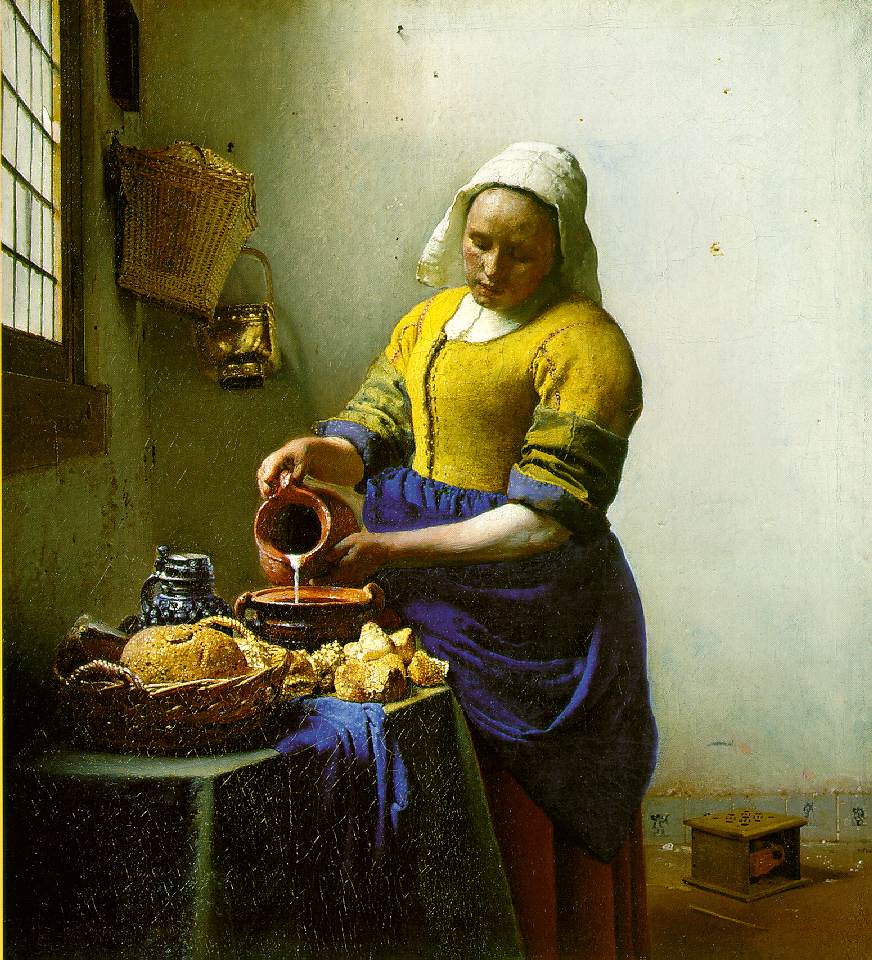
For me, the essence of being at home is being concernfully engaged with the world around me - where I care most deeply about my actions and their consequences on other members of my family. I see this concernfulness reflected in the Vermeer interiors that we saw in the Rijks Museum at the weekend. But I think it's a dynamic balance between being at home and being 'away from home'.

Is 'play' being away from home? But what about when I play the piano? That is concernful and homely (like Vermeer's Music lesson). Or playing a game of cards with family and friends... What about playing on slot-machines at the seaside? Maybe I'm wrestling with the elasticity of it all...

Going to University is a conscious going 'away from home', where concernfulness is focussed on something new. The relationship between exploration and discovery is one of reaching-out and bringing-back. If we only reach-out, we risk getting lost.

I wonder if social technology takes us away from home too. The risk with technology is that we really can get lost; that we never return home, that we convince ourselves that home is amorphous, unreal, a construct. Is concernful action with Facebook  (or this blog) the same as concernful action with a jug of milk? I'm not sure it is, and maybe the distinction is to do with whether the concern is at home or away. I need to think more about this. When I do this blog, I "reach out to bring back home." I do it because I need to do it. Reaching out is often fun, but I've never really done it simply because it is fun.. I do it because I recognise my need to do it for the sake of a happy 'homeliness'.

Maybe this is another way of expressing the relationship between the inner and outer worlds. Maybe it's got something to do with the discussions around 'dwelling' and 'enframing' that we had when doing the Personal Learning Environment work a few years ago. Concernful action and dwelling are both Heideggarian phrases...Certainly, if I never reached out from home, I think home would drive me crazy!


Baca Selengkapnya ....
Trik SEO Terbaru support Online Shop Baju Wanita - Original design by Bamz | Copyright of wallpaper dinding.